Manners vs. Kindness: What’s the Difference
Nina OttmanShare
“Manners” and “kindness” often get used interchangeably, especially when we’re talking about toddlers.
We remind them to say please. We correct tone. We prompt thank you. And sometimes, in the middle of all that coaching, it can feel like we’re checking boxes instead of teaching something deeper.
But manners and kindness aren’t the same thing. And understanding the difference can make teaching both feel clearer and more doable.
When we separate how children behave from why they behave that way, we create space to teach social skills and empathy, without turning everyday moments into power struggles.
1. What We Mean When We Talk About “Manners”
Manners are the visible behaviors that help people interact smoothly.
They’re the social agreements we all rely on:
-
Saying please and thank you
-
Using polite language
-
Waiting for a turn
-
Speaking respectfully
Manners are helpful. They give children structure and predictability in social situations. They help kids know what’s expected of them, especially in public or unfamiliar settings.
For toddlers, manners are often taught through repetition and prompting. They’re concrete, observable, and easy to practice.
In many ways, manners are the training wheels of social interaction.
2. What Kindness Is (and Why It Goes Deeper)
Kindness is internal.
It’s rooted in empathy, compassion, and intention. Kindness shows up when a child:
-
Notices how someone else is feeling
-
Tries to help or repair hurt feelings
-
Acts with care, even when no one is watching
Kindness isn’t always neat or polite. A kind moment might look awkward. It might sound clumsy. It might not follow the “right” script.
But kindness is what gives manners meaning.
Without kindness, manners are just words. With kindness, manners become expressions of care instead of obligations.
3. Why Manners Alone Aren’t Enough
Manners are important, but they’re not the end goal.
If we focus only on outward behavior, children can learn to perform politeness without understanding empathy. They may say the right words while missing the emotional context underneath.
That doesn’t mean manners are wrong. It just means they’re incomplete on their own.
Toddlers are still developing emotional awareness. They often need help connecting actions to feelings. Teaching kindness alongside manners helps children understand why certain behaviors matter, not just which ones are expected.
4. Teaching Manners and Kindness as One
When taught intentionally, manners can support kindness rather than replace it.
Think of manners as the structure and kindness as the motivation.
We can:
-
Teach “please” as a way to ask respectfully, not a magic word
-
Teach “sorry” as part of repairing, not just ending a moment
-
Teach waiting as consideration for others, not just compliance
When we connect manners to empathy, children learn that social rules exist to help people feel safe, respected, and cared for.
This is where conversations matter as much as correction.
5. Reinforcing Kind Behavior in Everyday Life
Teaching both manners and kindness doesn’t require constant correction or long lectures. It works best when it’s woven into daily life.
Small, consistent tools can help:
-
Naming kind moments when they happen
-
Talking through feelings after hard interactions
-
Using visual reminders to reinforce effort and growth
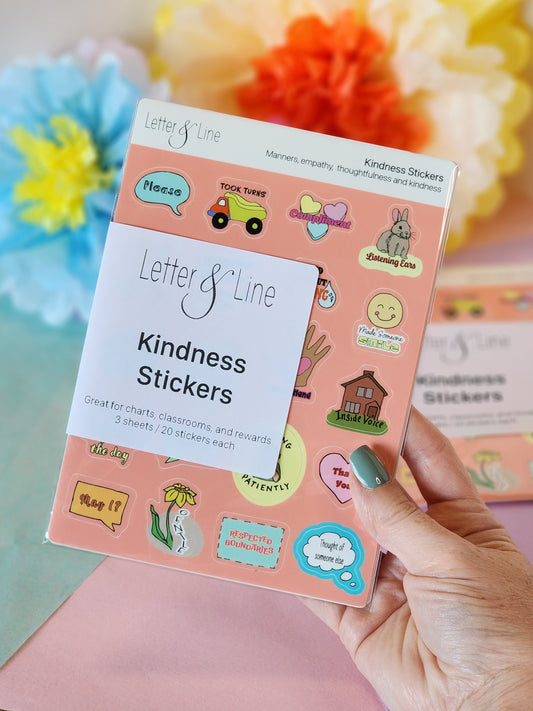
This is where kindness charts, manners stickers, and simple routines can support learning. They make abstract ideas visible and help toddlers track progress without pressure.
The tools don’t teach kindness on their own. They support the conversations, modeling, and repetition that make kindness stick.
Manners and kindness aren’t competing ideas. They work best together.
Manners give toddlers the structure to navigate the world. Kindness gives them the reason to care about how their actions affect others.
When we treat manners as the training wheels and kindness as the destination, we move from teaching children how to act to helping them understand why it matters.
And that’s where real learning begins.