The Missing Piece in Most Potty Training Plans: Celebrating Small Wins
Nina OttmanIt's easy for potty training to become results-focused.
Did they go in the potty?
Did they stay dry all day?
Are they “trained” yet?
And while those milestones matter, they’re not actually where most of the learning happens.
The real progress is quieter. Messier. Easy to overlook.
It’s in the moments where your toddler tries, notices, connects, or participates, even if the end result isn’t perfect yet.
That’s the missing piece in most potty training plans: we focus so much on the outcome that we forget to celebrate the progress getting there.
If you’ve ever felt like you’re doing everything “right” and still getting nowhere, this is probably the missing piece.

1. Why “success” in potty training is often defined too narrowly
Most potty training plans define success as one thing: pee or poop in the potty.
That’s the end goal. But if that’s the only thing we acknowledge, we skip over 90% of the learning process.
Here’s what that looks like in real life:
- A child tells you they need to go… but it’s too late
- They sit on the potty willingly (miracle, honestly)
- They stay dry for two hours instead of one
- They wash their hands without being reminded
- They try again after an accident instead of melting down
None of those “count” in a traditional sense.
But developmentally? They count a lot.
When we only celebrate the final outcome, we unintentionally send the message that everything leading up to it doesn’t matter.
And for a toddler who is still figuring out how their body works… that’s a tough standard.
2. What small wins actually look like (and why they matter)
Small wins are the building blocks of potty training.
They’re the signals that your child is learning, even when it doesn’t feel like progress.
Some examples of small wins:
- Awareness: “I’m wet” or “I need to go” (even after the fact)
- Participation: Sitting on the potty, even briefly
- Communication: Telling you anything related to the process
- Effort: Trying again after an accident
- Independence: Pulling pants up/down, flushing, washing hands
These moments matter because they show that your child is:
- Making connections
- Practicing new skills
- Building confidence
- Staying engaged in the process
When you zoom out, potty training isn’t a single skill. It’s a stack of skills layered over time.
And small wins are how that stack gets built.

3. Why toddlers need reinforcement for progress (not perfection)
Toddlers are not mini adults.
They are brand new to:
- Interpreting body signals
- Stopping what they’re doing
- Managing clothing
- Handling success and failure
- Learning as a process in general
So when we expect consistency before those skills are fully formed, we get frustration on both sides.
Here’s what actually works better:
Reinforcing progress instead of the outcome.
When you celebrate small learning wins, you’re telling your child:
- “You’re on the right track”
- “I see what you’re trying to do”
- “With practice, you'll get there”
That kind of feedback keeps them engaged instead of discouraged.
Compare these two approaches:
Outcome-only mindset: “No sticker, you didn’t go in the potty.”
Small wins mindset: “You told me you had to go. That’s a big step. Let’s try again next time.”
Which one makes a toddler more likely to keep trying?
At this age, motivation is fragile. If the only reward comes at the very end, it's hard for kids to stay engaged through the whole process.
4. How celebrating small wins actually speeds up potty training
This is the part that feels counterintuitive.
You might think:
“If I reward everything, won’t they just settle for less?”
In reality, the opposite happens.
When kids feel successful, they:
- Stay engaged longer
- Take more initiative
- Recover faster from setbacks
- Build momentum
And momentum is everything in potty training.
Think of it like this: A child who hears “that didn’t count” over and over starts to feel like the effort they're putting in is pointless. A child who hears “you’re getting closer” starts to believe they can do it.
One shuts down. One leans in.
Guess which one gets to full independence faster?

5. The bigger payoff: raising kids who value effort, not just results
The best part of this mindset shift is that it doesn’t stop at potty training.
It carries into:
- Learning routines
- Building responsibility
- Trying new things
- Handling frustration
- Developing confidence
When you consistently celebrate effort and progress, you’re teaching your child:
- Growth matters
- Trying matters
- Progress matters
Not just “getting it right.”
That’s a long-term advantage.
Because eventually, the stickers go away.
But the mindset stays.
And that’s what sets kids up to tackle harder things later, without needing everything to be perfect on the first try.

6. How to start noticing and celebrating small wins
It’s not a whole new system. Just a small shift in what you’re paying attention to.
Start by looking for effort, not just results. Did they try? Did they tell you? Did they participate, even a little? Those moments count.
When you see it, say it out loud. Keep it simple:
“You told me you had to go.”
“You sat on the potty right away.”
“You tried again.”
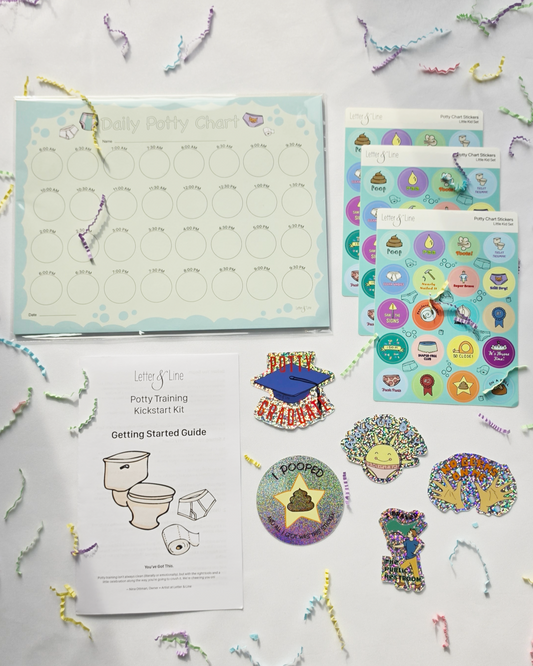
You can still use rewards, just aim them at progress, not perfection. Stickers for effort. Bigger celebrations for bigger milestones.
And most importantly, keep it light. No pressure. No lectures. No turning it into a performance review.
This isn’t about tracking every tiny thing.
It’s about shifting from seeking perfection to building a learning mindset.
Potty training is one of those phases that can feel like it’s taking forever… until suddenly it’s over.
But the middle? The messy, unpredictable, accident-filled middle? That’s where the real work is happening.
If you only celebrate the finish line, you’ll miss the part that actually gets you there.
Noticing small wins is about building that path.
And when your child feels successful along the way, everything gets a little easier for both of you.