My Toddler Won’t Poop on the Potty: Overcoming Poop Withholding
Nina OttmanIf your toddler will pee in the potty but refuses to poop, you’re not alone.
Poop withholding is one of the most common (and most stressful) potty training hurdles. A child who was making progress suddenly asks for a diaper. Or disappears behind the couch. Or insists they “don’t have to go” while clearly doing the potty dance.
When a child won’t poop on the potty, it can feel confusing and discouraging. Especially if everything else was going smoothly.
The good news is this: toddler poop withholding is common, understandable, and very workable with the right approach.
Let’s break down what’s happening and how to move forward calmly.

1. Why Toddlers Withhold Poop During Potty Training
When a child won’t poop on the potty, it’s rarely about stubbornness.
Common reasons for toddler poop withholding include:
- The sensation feels different without a diaper (it's literally falling away from their body)
- They’ve had a painful bowel movement before and are afraid it will hurt this time too
- They feel pressure or attention around it, like everyone's watching
- They’re trying to maintain a sense of control and independence
Pooping on the potty requires:
- Body awareness
- The ability to relax
- A willingness to try something that feels new
For many toddlers, that’s a big leap.
Understanding this helps you shift from frustration to support.
2. When to Talk to Your Pediatrician
Before focusing only on behavior, it’s important to consider whether anything is going on physically that could be causing discomfort or pooping difficulty.
If your child:
- Has hard, pellet-like stools
- Strains frequently
- Goes several days without a bowel movement
- Complains of stomach pain
- Seems fearful because of a past painful experience
It may be constipation.
Potty training constipation can quickly become a cycle: holding leads to discomfort, which leads to more holding.
If you suspect constipation or if your toddler consistently won’t poop on the potty despite gentle support, check in with your pediatrician. They can rule out underlying issues and recommend safe next steps.
This article focuses on behavioral strategies, but physical comfort always comes first. (More about constipation from the Mayo Clinic.)

3. Reduce the Pressure Around Poop
One of the biggest drivers when a toddler won’t poop on the potty is pressure. Even positive excitement can feel intense. If your child senses that poop is a “big deal,” they may tighten up instead of relax.
Try:
- Keeping your tone neutral
- Avoiding constant reminders
- Letting them sit briefly without long expectations (10-20 seconds is more than enough to determine if they actually need to go or not)
- Offering privacy if they prefer it
It can also help to zoom out a little.
Potty training doesn’t have to feel like a high-stakes milestone. It’s a skill. And skills develop through practice.
Right now, pooping on the potty feels unusual. Eventually, it becomes ordinary.
The goal isn’t to force a breakthrough moment. It’s to make each attempt feel calm, predictable, and low-pressure.
When the tone stays steady, children are more likely to relax. And relaxation is what their body needs most.
4. Make Pooping Feel Less Scary
For many toddlers who won’t poop on the potty, it isn’t about defiance. It’s about uncertainty.
Pooping without a diaper feels different. The sensation is new. The position is new. The sound is new. That’s a lot for a small person.
Instead of trying to “convince” your child to go, focus on making the experience feel predictable and manageable.
Here are a few ideas:
- Use a footstool so their knees are higher than their hips
- Keep your tone calm, soothing, and matter-of-fact
- Offer a short book, song, or, if it fits your parenting style, a brief video while they sit.
One simple strategy that worked well in our house was holding hands and counting to 20.
We’d sit together, hold hands, and count slowly. At the end of 20 seconds, we were done whether a poop happened or not.
That small, reliable time limit reduced the pressure. There was no endless waiting. No performance expectation. Just a short window to try.
More often than not, it worked.
The goal isn’t forcing a result. It’s helping your child feel supported while their body does something that feels unfamiliar.

5. Celebrate the Small Steps Toward Poop Success
When a child won’t poop on the potty, it’s easy to focus only on the outcome.
Did it happen or not?
But potty training works best when we widen our lens.
Progress isn’t just the poop landing in the toilet. It’s the awareness. The effort. The willingness to try again.
What you water grows.
When you consistently notice and reinforce the steps leading up to success, you help your child build confidence instead of anxiety.
Look for smaller wins like:
- Sitting without resistance
- Telling you they need to poop
- Trying, even if nothing happens
- Staying calm after an accident
These moments are learning in progress.
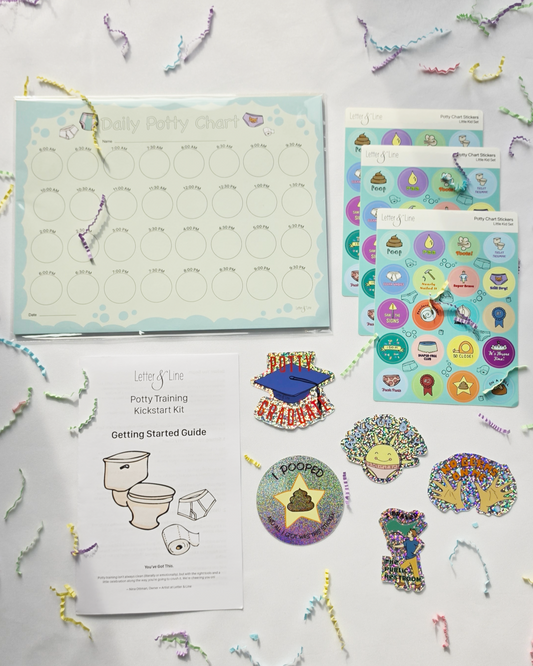
If you use a potty chart or milestone sticker, you can mark attempts and bravery, not just success. This keeps momentum moving forward without turning poop into a performance.
Conclusion
Poop withholding during potty training can feel like a setback, especially if peeing is going well.
But when a toddler won’t poop on the potty, it’s usually not regression. It’s a child navigating a new physical and emotional experience.
Reduce pressure. Support comfort. Celebrate attempts. Stay steady.
Most children move through this phase with time, patience, and calm, consistent encouragement.
And when that first poop in the potty happens, it truly is a milestone worth celebrating. Not because it’s dramatic, but because of everything your child practiced to get there.