Potty Training While Traveling: Tips for Airports, Cars & Hotels
Nina OttmanYou finally feel like you’ve got a handle on potty training. Your kid is doing it. Maybe not perfectly, but consistently enough that you’ve stopped holding your breath every time go to the grocery store. And then someone mentions a scary word . . . vacation.
Cue the spiral. Because now it’s not just a bathroom, it’s an airport bathroom. Or a gas station. Or a hotel room with unfamiliar fixtures and no stool and a toilet that auto-flushes approximately one second after your child makes contact with it. Potty training while traveling is its own category of challenge, and if you’re dreading a trip because of it, you’re not not alone.
The good news is that it’s usually more manageable than it looks from the outside. A few things that work at home translate pretty well on the road. The things that don’t? We’ll get to those too.
Here’s what actually helps when you’re potty training while traveling, whether you’re stuck in a car for six hours, navigating an airport with a carry-on and a toddler who just announced they need to go, or trying to maintain any semblance of a routine from a hotel room.
1. Before You Leave: Reset Your Expectations (Just a Little)
Travel disrupts everything. Sleep, meals, screen time limits. All of it gets a little wonky when you’re away from home. Potty training is no different. Some kids handle the change fine. Others regress. Neither is a reflection of what you’ve been doing.
What helps most is treating trip accidents like just a bump in the road. Handle it the same way you would have in the early weeks of potty training, and know that it's just an accident, not a setback. The progress your child has made already is still there.
A few things worth doing before you leave:
- Pack up to two or three extra changes of clothes per day, or have a laundry backup plan. You know your kid best.
- Bring a portable travel potty or foldable toilet seat insert. These are genuinely worth the bag space.
- Pack your stickers or any reward system you’ve been using at home. Consistency in the reward matters almost as much as consistency in the routine.
- If your child is nervous about unfamiliar toilets, talk about it before you go. “Some toilets are loud, and that’s okay” goes a long way.

2. Road Trips: The Long Stretch
Car travel is actually one of the more manageable scenarios, because you have control over when you stop. The problem is that toddlers don’t always give you a lot of warning, and “I can hold it” is not a concept most two- or three-year-olds have fully internalized.
The move that saves more road trips than anything else: scheduled stops. Don’t wait for your child to tell you they need to go. Every 90 minutes or so, stop and try. Make it matter-of-fact. “We’re stopping to stretch and try the potty.” Not a big production. Some stops will produce nothing. That’s fine. You’re preventing the ones that would have produced something in the car seat.
A portable travel potty in the car is worth serious consideration for long drives, especially if you’re on stretches of highway with limited exits. The ones that fold flat pack easily and give you a real option when the next rest area is 40 miles away and your kid just said the words. Just keep in mind that the first time using it roadside can be a bit scary. Some parent swear by setting it up inside the car for added privacy and a more familiar environment (you can double the bag if you're nervous about leaks).
One more thing: if your child is newer to potty training, a pull-up or training underwear for the car is another option. It can be especially practical if your child still wears pull-ups for sleeping. You can still offer the potty at every stop, but also not panic if your kiddo drifts into an especially long car nap.
3. Airports: The Wildcard
Airports are a particular kind of chaos. You’re juggling bags and boarding passes and a moving walkway your toddler wants to stand still on, and somewhere in the middle of all that, they need a bathroom. Now.
A few things that actually help:
- Use the bathroom before you go through security, and again right before you board. These are your two biggest windows of relative calm. Use them even if your child says they don’t need to go.
- Find the family restroom. Most major airports have them. They’re bigger, quieter, and don’t have the motion-sensor flush situation that sends some kids into a full meltdown.
- Speaking of which — auto-flush toilets. If your child is scared of them, put your hand over the sensor while they’re sitting. Simple fix. Does wonders.
- On the plane, go to the bathroom as part of boarding prep (great time to introduce them to a new potty before it's an emergency), and plan to go again mid-flight. Aisle seats are your friend.
- Pack a full change of clothes in your personal item, not your checked bag. We hope not to need it, but it's a relief knowing it's there.
If there’s an accident during travel, keep your reaction low-key. This is genuinely hard when you’re surrounded by strangers and running for a gate, but your child is watching how you respond. A calm “Oh, let’s get you changed” lands differently than a visible panic, and it matters for how they approach the next attempt.
4. Hotels: Making an Unfamiliar Bathroom Feel Familiar
Hotels are often the part people worry about least, but they come with their own set of quirks. The bathroom is usually fine. The toilet is standard. What’s different is everything around it. The new environment, the different bedtime, the total absence of the usual visual cues your child has come to associate with the routine.
If your child uses a potty chart or a reward system at home, recreate it in the hotel room. Seriously. It takes about 30 seconds to stick something on the wall or the mirror, and it signals that the routine is the same even if the room isn’t. This is one of the underrated tricks of traveling with a kid in potty training: the physical cue does a lot of the work.
Same with timing. If your child does a pre-nap bathroom trip at home, do it in the hotel. If they go right before bed, do it in the hotel. The sequence of events is part of what makes the habit stick. When you skip it because you’re tired or it seems like a lot, that’s usually when the accident happens at midnight.
A travel potty seat insert is also useful here — especially for younger kids or kids who are still shaky about sitting on a full-size toilet without some help. The familiarity of their own insert can make a strange bathroom feel much less weird.
If you're in the middle of night-training, bringing along a few puppy-pads to top the fitted sheet will help you and your child feel more secure at nighttime. If an accident happens, it's just a quick pajama change and swap in a new pad. No late-night calls for extra bedding (or the guilt that's sure to go with it).
More night-training tips here.

The Thing That Travels Best
Here’s the thing about potty training while traveling: the environment changes, the bathroom changes, the whole day changes. What can stay consistent is your approach. The calm tone. The same language you use at home. The same little moment of recognition when they try or when they succeed.
That’s what stickers are for, by the way. A reliable signal of what's expected. Your child doesn’t know that they’re in a Marriott in Ohio. They know that when they use the potty, they get the sticker, and the sticker means they did it right. That connection travels.
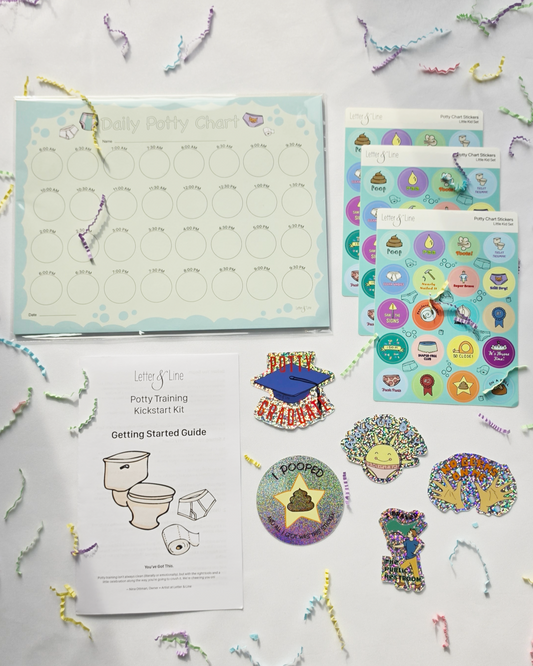
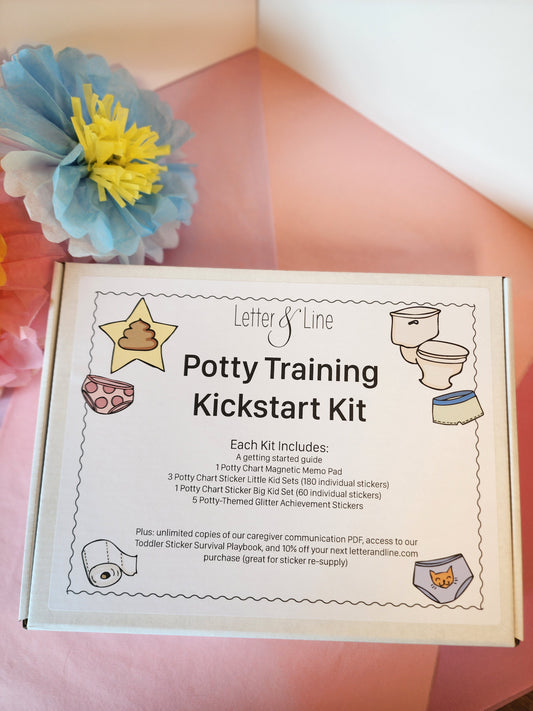
If you’re just getting started and want something that holds up at home and on the road, the Potty Training Starter Kit has everything you need to build that foundation: reward stickers, milestone stickers, and a consistent system that actually fits in your bag. The idea is that when the routine is solid before you travel, the travel doesn’t knock it over as easily.
You’ve already done the hard work of building the habit. Travel is just a test drive.