How to Start Potty Training: A Step-by-Step Guide for Parents
Nina OttmanIf you’re reading this, you’re probably asking one very practical question:
How do I actually start potty training?
Not in theory. Not someday. But literally — where do I start potty training with my child?
For first-time potty training parents, the beginning can feel surprisingly unclear. You’ve seen the books. You’ve heard about the three-day method. Someone swears by child-led training. Someone else says to wait.
Meanwhile, you’re browsing the web looking at tiny underwear wondering what the actual first step is.
This guide walks you through how to start potty training step by step, so you can move forward with clarity and confidence. No pressure. No perfection required. Just simple, practical first steps for potty training that work in real family life.

1. Confirm You’re Starting at the Right Time
Before worrying about methods or charts, pause and look at readiness.
If you’re wondering where to start potty training, the first place to look isn’t the calendar. It’s your child.
Common readiness signs include:
-
Staying dry for longer stretches (1–2 hours)
-
Showing interest in the bathroom or toilet
-
Noticing when they’re wet or dirty
-
Telling you before, during, or right after they go
-
Being able to follow simple instructions
Not every child shows every sign. And readiness doesn’t necessarily mean your child is asking to use the toilet.
You don’t need a flashing green light. You’re looking for a pattern of awareness and growing independence.
If you see some of these signs consistently, you’re likely ready to begin the first steps of potty training.
And if you’re still unsure, you can read more about readiness in 5 Signs Your Toddler Is Ready to Potty Train.
2. Choose an Approach You Can Actually Be Consistent With
When parents ask how to start potty training, they often assume there’s one “right” method.
There isn’t.
You may have heard of:
-
The 3-day potty training method
-
The “Oh Crap” method
-
Going straight to underwear
-
The naked method
-
Waiting until age 3 or later
-
A slower, child-led approach
Each of these potty training methods has families who swear by it. And each one can work under the right conditions.
The most important factor is not which method you choose. It’s whether you can be consistent with it.
Ask yourself:
-
Do I have a few uninterrupted days available for an intensive approach?
-
Or does this need to fit around work, daycare, or siblings?
-
Does my child respond well to clear structure?
-
Or do they do better with gradual change?
For first-time potty training families, it’s easy to feel like you need to choose perfectly. You don’t.
Choose the approach that fits your schedule, your child’s temperament, and your capacity right now. You can always adjust as you go.
Potty training works best when it feels sustainable. A method that fits your real life will always beat a method that looks impressive but feels overwhelming.
If you’d like a deeper breakdown of the most common potty training methods and how they compare, I'll be covering that in a future article.

3. Set Up Your Environment for Potty Training Success
If you’re wondering how to start potty training, this is one of the most overlooked first steps: setting up your environment and gathering your tools before you officially begin.
You don’t need a Pinterest-perfect bathroom. You just need things to feel simple and accessible.
Here’s what helps:
-
A child-sized potty for the floor or a toilet seat insert with a stable step stool
-
Easy-to-remove clothing (2-piece clothing with elastic waistbands are your friend)
-
Fun underwear! (who doesn't love a wardrobe refresh?)
-
A plan for accidents (extra clothes nearby, calm response ready)
For many first-time potty training families, the beginning feels chaotic because everything is happening at once. Setting up your space ahead of time reduces that stress.
If your child can reach the toilet, pull down their own pants, and wash hands without being lifted or rushed, you’ve already made the first steps of potty training easier.
You’re building independence into the environment.
4. Plan Your First 3 Days (Even If You’re Not Doing the 3-Day Method)
Even if you’re not following the 3-day potty training method exactly, it helps to think intentionally about your first few days.
Day 1 potty training doesn’t need to be dramatic. It just needs to be focused.
Consider:
-
Clearing your schedule as much as possible
-
Staying home or in a familiar environment (I do not recommend starting while on vacation or visiting someone else's home)
-
Increasing fluids slightly (so there are more opportunities to practice)
-
Setting a timer if that feels helpful
You’re not aiming for perfection. You’re creating repetition.
On the first day of potty training, these things are totally normal:
-
Accidents
-
“I don’t need to go” followed by immediate urgency
-
Curiosity
-
Resistance
It's more about setting expectations and creating a clear starting point than "getting it" on day 1.
Keeping your tone calm and matter-of-fact sets the emotional tone for the entire process. When accidents happen, respond neutrally. When awareness shows up, celebrate it.
That simple shift makes a huge difference.
Read more: What to Expect the First Week of Potty Training.

5. What to Do on Day 1 of Potty Training
When parents ask where to start potty training, they’re often really asking: What do I actually say?
Here’s a simple Day 1 script you can adapt:
-
“Your body is learning something new.”
-
“When you feel pee or poop coming, we’ll go to the potty.”
-
“Pee and poop go in the potty. We’re practicing.”
Prompt gently when it makes sense to rather than a constant lecture. Offer reminders at natural transitions: after waking, before meals, before leaving the house.
Celebrate:
-
Sitting on the potty
-
Telling you they need to go (even if it’s late)
-
Trying
You’re reinforcing awareness, not just outcomes.
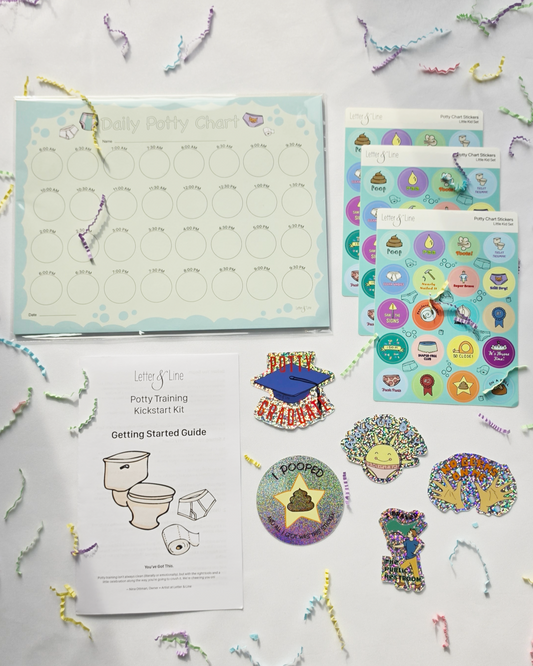
If you’re using a potty chart or stickers, introduce them on Day 1 as a fun way to track progress, not as a reward system that requires total dry-day perfection (you can add dry-day rewards later). This keeps the experience light and motivating, especially for first time potty training families who may feel unsure.
6. Keep It Fun and Flexible
Potty training works best when it doesn’t feel like a battle.
Add small elements of play:
-
Let your child decorate their potty area
-
Read potty-themed books
-
Sing a silly “potty dance” song
- Make an over-the-top special high-five (we do fist-bump that turns into fireworks!)
Some kids love a big celebration. Others prefer a quiet “nice job.” Either way, you’re showing them this is a positive step forward.
And remember: the first steps of potty training are about building awareness and confidence. Not finishing in record time.

Closing Thought
If you’ve been wondering how to start potty training, the answer is simpler than it seems:
Start with readiness.
Choose a method you can sustain.
Set up your environment.
Focus your first few days.
Celebrate small progress.
You don’t have to do it perfectly. You just have to begin.
And once you do, those small steps add up quickly.