Potty Training in the Wild: Family Events
Nina OttmanYou think you’re ready.
You’ve got the snacks packed, the extra clothes, the wipes, the pull-ups “just in case” (even though you said you weren’t going to use them), and a vague sense of optimism.
And then you arrive.
Someone’s grilling. Someone’s holding a baby. Your toddler is immediately handed a popsicle the size of their forearm. Your mother-in-law is telling you to stop looking so nervous because she can “help keep an eye on things.”
Right.
This is where potty training gets interesting.
So let’s talk about it.

1. The “Helpful” Family Member
There is always someone.
They mean well. They really do. But they have absolutely no idea what your current system is, what cues you’re watching for, or why you’re not rushing your child to the bathroom every 12 minutes “just to be safe.”
So now you have:
- Someone prompting your child at random intervals
- Someone celebrating things you’re not actually tracking
- Or even . . . someone panicking on your behalf (not necessary!)
And suddenly your toddler is confused, you’re irritated, and everyone’s looking at each other like what are we supposed to do?
Here’s the move:
Get ahead of it.
A simple, casual heads-up goes a long way:
“Hey, we’re working on potty training right now. I’ll handle bathroom trips, but feel free to send them my way if you notice anything.”
That’s it. No long explanation. No system breakdown.
You’re not assigning a team. You’re setting a boundary.
2. The Bathroom Situation (A.K.A. The Wild Card)
Your house is predictable.
Your house has a bathroom your child knows. A stool that’s the right height. Maybe even a little routine they’ve gotten used to.
Now we’re at:
- Grandma’s house with a toilet that feels like it’s 4 feet off the ground
- A park restroom that smells like regret
- Or a line of 12 people waiting for the only stall
Cool.
This is where a tiny bit of preparation saves you a lot of stress.
A few things that help:
- A portable seat or travel potty (if you’re in that phase)
- A quick “test run” when you arrive (“Let's check out the bathroom”)
- Keeping expectations low
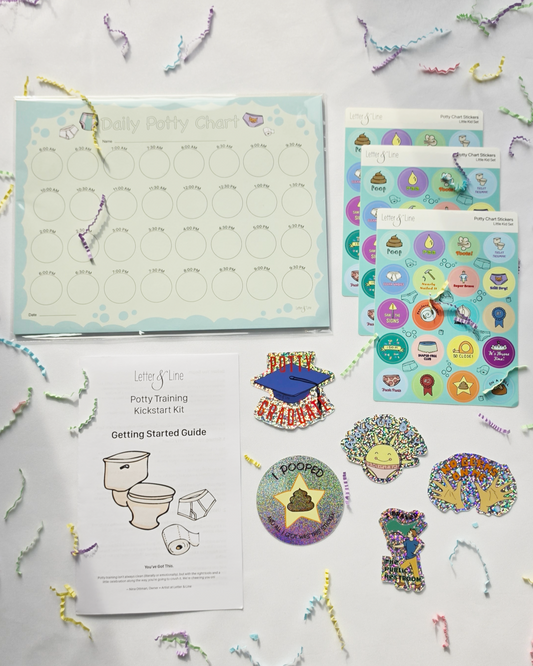
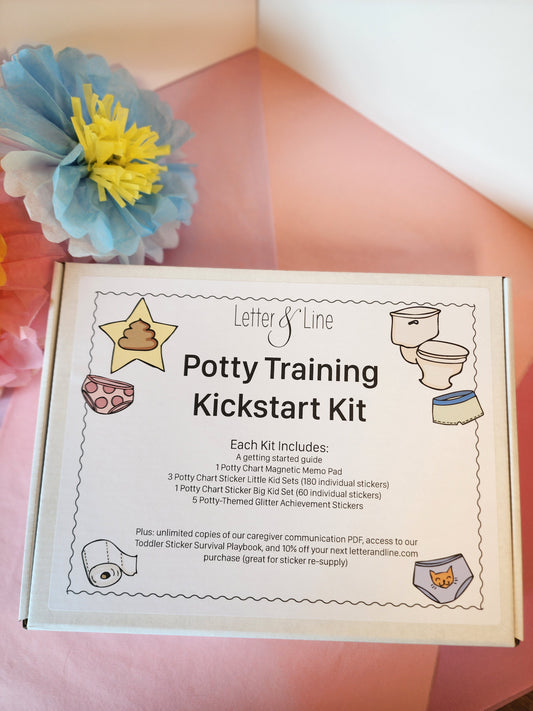
Having the right tools already in rotation at home can also make the transition to new environments easier — this is what we built the Starter Kit around.
Here’s the truth:
Your toddler might refuse the bathroom today based purely on the fact that it’s a new situation. Or because the like the power of saying no.
That doesn’t mean it's going wrong. It means they’re a toddler.
(If refusal and power struggles are already part of your daily routine at home, that's worth addressing separately.)

3. The Distraction Factor is Real
At home, you’re working with a controlled environment.
At a holiday gathering?
You’re competing with:
- Other kids
- Food
- Games
- Fireworks
- General chaos
Your toddler is not thinking about their bladder.
They are thinking about literally everything else.
So when people say:
“Just have them tell you when they need to go!” . . . yeah, why don't we stick with what we know works instead.
Instead of just hoping for the best, put yourself back in the driver’s seat for the day.
This might look like:
- More frequent check-ins
- Taking advantage of natural pauses (before eating, before leaving, etc.)
- Watching for cues more closely than usual
We're being realistic and giving our kid the extra nudge they need.
4. The “We’ll Just Be Here a Few Hours” Lie
You tell yourself it’s a short visit.
You’ll be in and out. No big deal.
And then:
- Someone brings out dessert
- Someone starts a story
- Someone suggests a walk
And suddenly you’re three hours past your mental cutoff and your toddler is one juice box away from disaster.
We’ve all done it. Especially if you're from the midwest, like me, where goodbyes alone can last over an hour.
This is where it helps to have a loose plan:
- Know your typical timing windows
- Decide ahead of time how flexible you’re willing to be
- Have an exit strategy if things start to unravel
Because sometimes the win is: “We stayed, we had fun, and we left before it all went sideways.”
That counts.

5. When It Doesn’t Go Well (Because Sometimes It Won’t)
Accidents happen.
They’re more likely in new, busy, unpredictable environments. That’s not a reflection of your child or your progress. It’s just the situation.
And if we’re being honest, the hardest part usually isn’t the accident itself.
It’s the audience.
Now you’ve got:
- Someone offering advice
- Someone overreacting
- Someone saying, “Oh noooooooo, what happened?” like it’s a crisis.
Meanwhile, you’re just trying to find a change of clothes and keep things moving.
This is where you get to decide how much weight that moment carries.
You can treat it like a setback.
Or you can treat it like:
“Yep. That tracks. Let’s clean up and move on.”
Because that’s all it is.
You don’t need to go perfectly to still make a successful outing.
Give yourself a realistic plan and a little flexibility.
Family events are unpredictable. The environment is different. The routines are off. Of course it’s harder.
But it's not a disaster. You’re practicing in the real world. And every one of these experience helps your little learner lock in on real-world expectations.
You've got this!