Positive Reinforcement for Toddlers: What It Is and How to Use It
Nina OttmanShare
Positive reinforcement is one of those parenting concepts most of us use long before we realize what we're doing.
We smile when our toddler tries. We acknowledge effort. We point out moments of growth. Over time, those small moments of recognition shape how our children learn, persist, and understand themselves.
When used intentionally, positive reinforcement becomes less about managing behavior and more about guiding learning. It helps toddlers connect effort with growth, and it helps parents focus on what’s actually moving things forward.
At its core, positive reinforcement is about noticing what’s going right and reinforcing the behaviors and mindsets we want to see more of.
1. What Positive Reinforcement Is (and What It Isn’t)
Positive reinforcement is the practice of noticing and reinforcing behaviors you want repeated.
That’s it.
Positive reinforcement works by highlighting effort, awareness, and attempts. When toddlers receive consistent feedback about what’s working, their brains learn what to repeat.
What it isn’t:
-
It isn’t ignoring the challenge and difficulty of learning new skills
-
It isn’t pretending every outcome is a good outcome
-
It isn’t handing out compliments for literally nothing
Positive reinforcement fits best alongside clear expectations. It simply shifts attention toward learning instead of mistakes.
2. Why Positive Reinforcement Works So Well for Toddlers
Toddlers are in a rapid learning phase where repetition, feedback, and attention matter deeply.
At this stage, children are constantly forming connections between:
-
What they do
-
How it feels
-
What response they receive
When effort and awareness are acknowledged, toddlers are more likely to try again. What they’re experiencing is simple and powerful: This mattered. I did something good. I want more of that.
Positive reinforcement supports skill-building by encouraging curiosity, persistence, and engagement. These are foundational learning tools that toddlers carry far beyond a single phase or milestone.
3. Positive Reinforcement Builds a Growth Mindset
Positive reinforcement shapes how toddlers understand progress.
When we reinforce effort and awareness, rather than outcomes alone, we help build a growth mindset that supports learning over time.
When we reward outcomes (“You get a sticker because you succeeded”), children learn to focus on results. When effort, awareness, and trying are reinforced, learning stays front and center.
Growth mindset reinforcement sounds like:
-
“You listened to your body.”
-
“You kept trying even when it was hard.”
-
“You remembered what to do.”
The focus stays on learning, not performance.
This approach helps toddlers understand that progress comes from effort and practice, not from getting everything right the first time. Over time, the reinforcement shifts from external acknowledgment to internal confidence.
4. “But I Want Them to Stop Doing ___” (The Reframe)
This is often where parents feel stuck.
We want certain behaviors to stop. Accidents. Hitting. Yelling. Ignoring instructions. And it’s natural to focus our attention there.
But attention is powerful. Toddlers repeat what receives the most energy.
Positive reinforcement doesn’t ignore unwanted behavior. It redirects attention toward the behavior you want to grow.
Potty training is a clear example. Accidents are handled calmly and neutrally. Moments of awareness are noticed and reinforced. Pausing mid-play. Getting almost to the bathroom. Telling you after the fact.
Those moments are learning in action.
By making very little of what didn’t work and a meaningful acknowledgment of what almost worked, we guide learning forward. What we water grows.
This same reframe applies to kindness, routines, and everyday challenges. We don’t deny the problem. We choose where to place the spotlight.
5. Where Positive Reinforcement Shows Up in Daily Life
Positive reinforcement doesn’t need to be loud, constant, or elaborate to be effective. In fact, it works best when it’s simple, predictable, and woven naturally into everyday moments.
You’ll see it show up in small ways, again and again.
- In potty training, it might look like acknowledging awareness instead of fixating on accidents. A simple sticker for sitting, trying, or telling you after the fact keeps the reinforcement visible and repeatable — which is exactly what the Little Kid Potty Reward Stickers are designed for
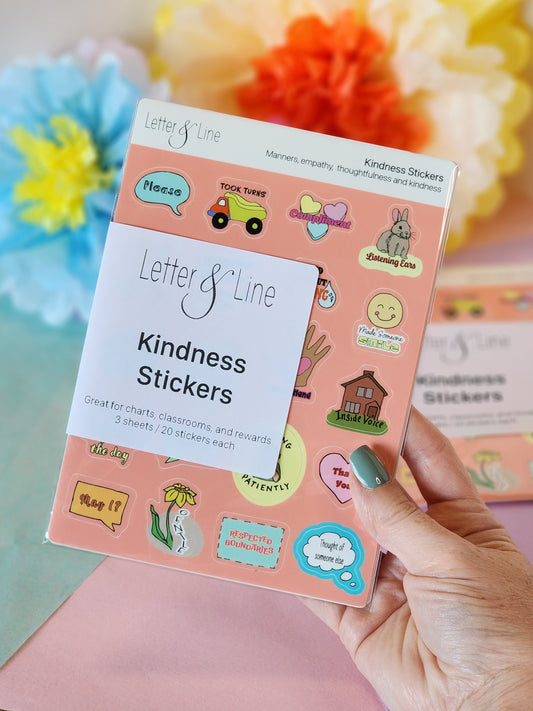
- In teaching kindness, it might look like pointing out gentle hands, sharing without prompting, or mending a friendship after conflict. Naming the effort to be kind, not just the outcome.
- In routines and responsibilities, it might look like recognizing follow-through. Getting started without reminders. Trying again after forgetting.
Tools like stickers or charts can help make progress visible, but they work best when they support the message you’re already sending: effort matters, learning counts, and growth is happening. The reinforcement isn’t about earning something. It’s about noticing something.
If you want to see what this looks like in practice, here's how positive reinforcement works specifically during potty training power struggles.
Over time, these small moments of recognition add up. They shape how your child sees themselves and how they approach challenges long after the sticker chart is full.
Positive reinforcement isn’t about ignoring what’s hard or pretending everything is a win. It’s about choosing where to place your attention.
When you reinforce effort, awareness, and persistence, you help your child build a growth mindset that supports learning over time. You also give yourself a clearer lens for seeing progress, even when it shows up in small, imperfect ways.
So notice the tries. Name the awareness. Celebrate the moments that show learning is happening. They've got this! And so do you.